First Woodworking Project for Beginners: A Shelf on a Bare Wall
Build your first real project this weekend: clear plans and the easy start shown in the video.
Watch the full video walkthroughSaturday morning, the garage is still cool, and the wall in the hall is bare. You have wanted something there for months, a place for keys and the mail, built by you. A first woodworking project for beginners is that urge made small enough to finish: a wall shelf, or a 2x4 workbench if the garage needs a surface before it needs a shelf. Lumber in the car by noon. Something hanging, or standing, before Monday.
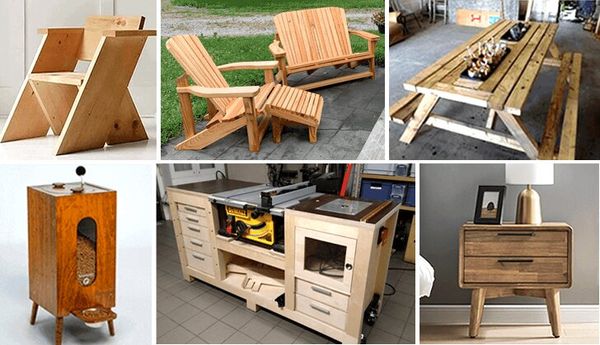
Ted’s Woodworking is the library behind that first finish and the ones after it. The library includes over 16,000 plans, each one, the guide says, built and tested in the shop before it was written down. Step-by-step instructions, drawings, a materials list, and a cutting diagram, so the weekend goes to the saw instead of to hunting a sketch that skips the hard step. Ted McGrath put the collection together after 25 years of workshop classes. You pick the shelf. You follow the page. You stand back when it is on the wall.
Finish a wall shelf, or start with the 2x4 workbench
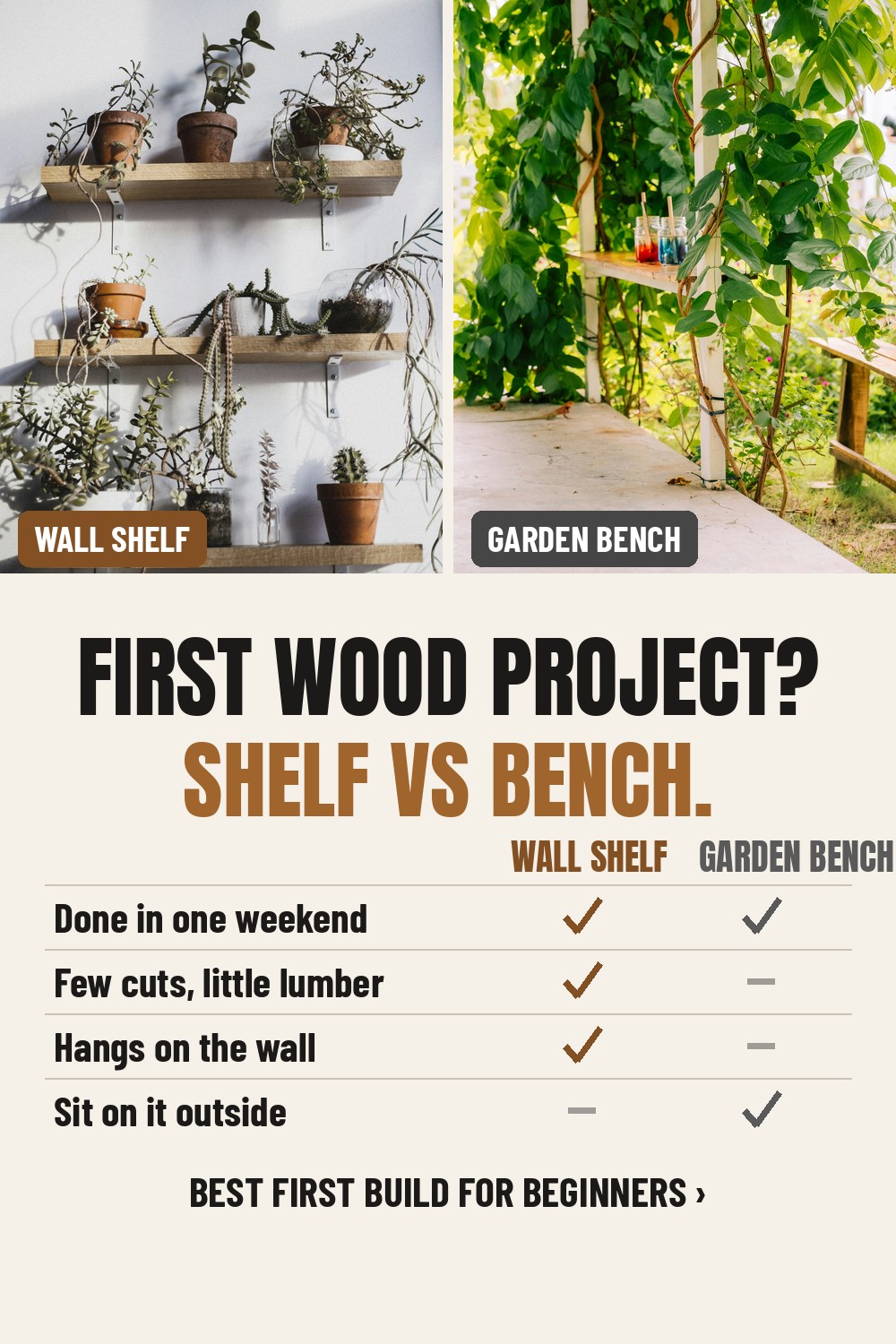
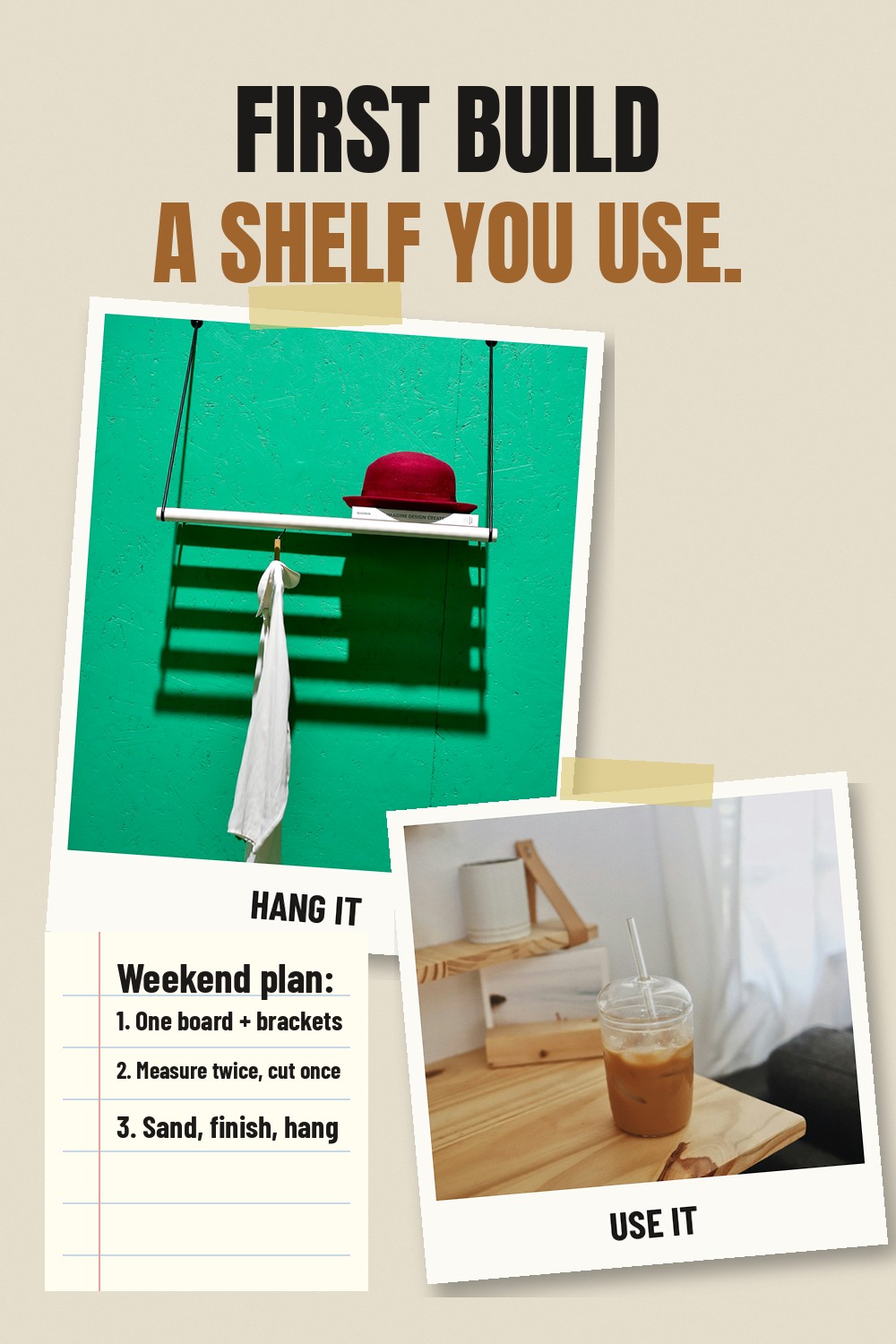
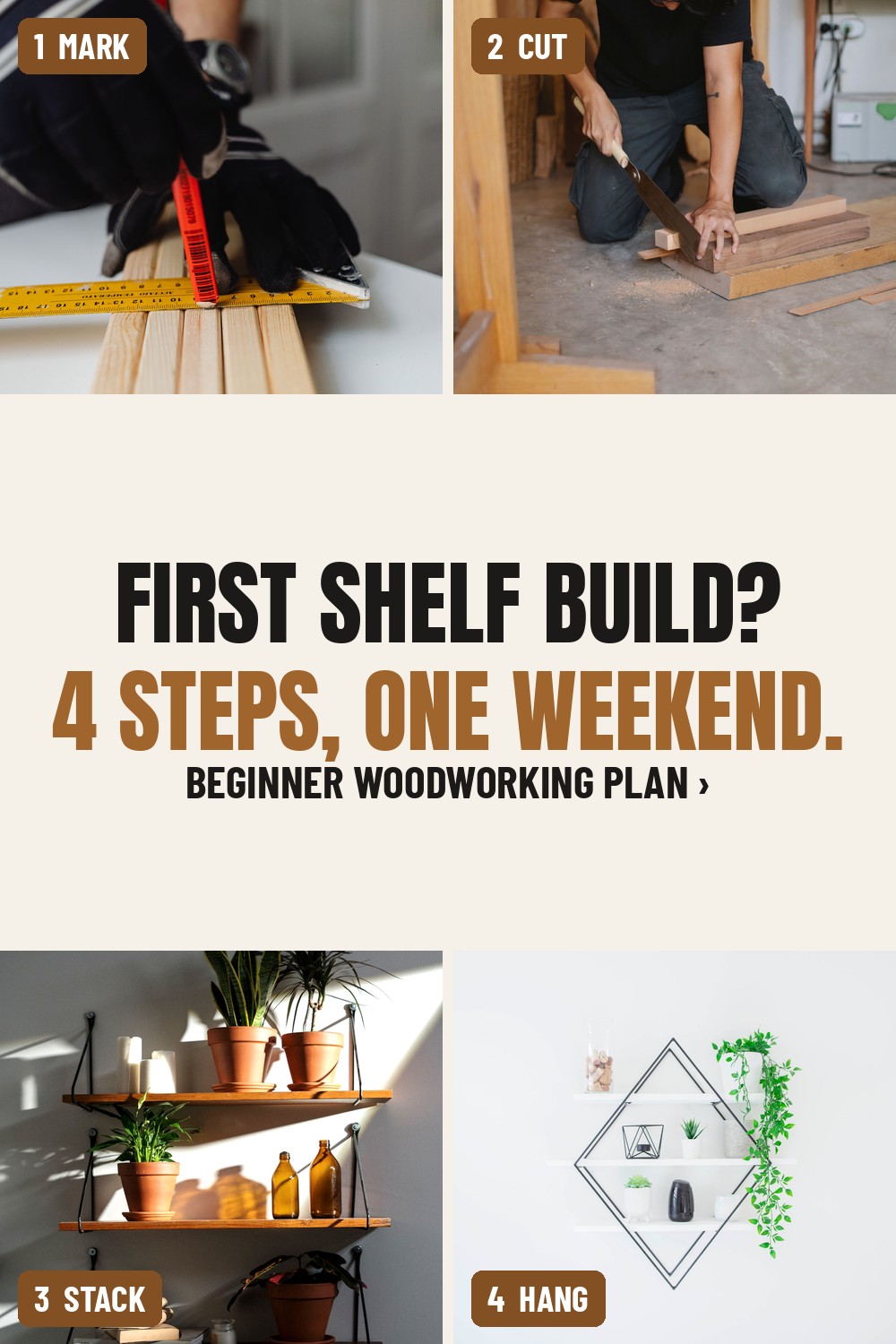
The shelf is the build most beginners can close in a day. One board, a cleat or brackets, screws into studs. You measure, you cut straight, you hang it level. The mail lands on something you made. If the garage is a pile and you want a place to work next Saturday, flip the order: a basic 2x4 workbench first, dimensional lumber, a drill, a circular saw, a square frame and a top you can build on later. The library includes workshop benches and small home projects in the same set, so either start has a plan with a cut list already written.
The guide says a beginner plan is written to follow, including for someone who has owned a saw for a few months. A small bookshelf is a common first finish in those notes. Yours can be the hall shelf. The pride is ordinary and real: you walk past it on Sunday and it is still level.
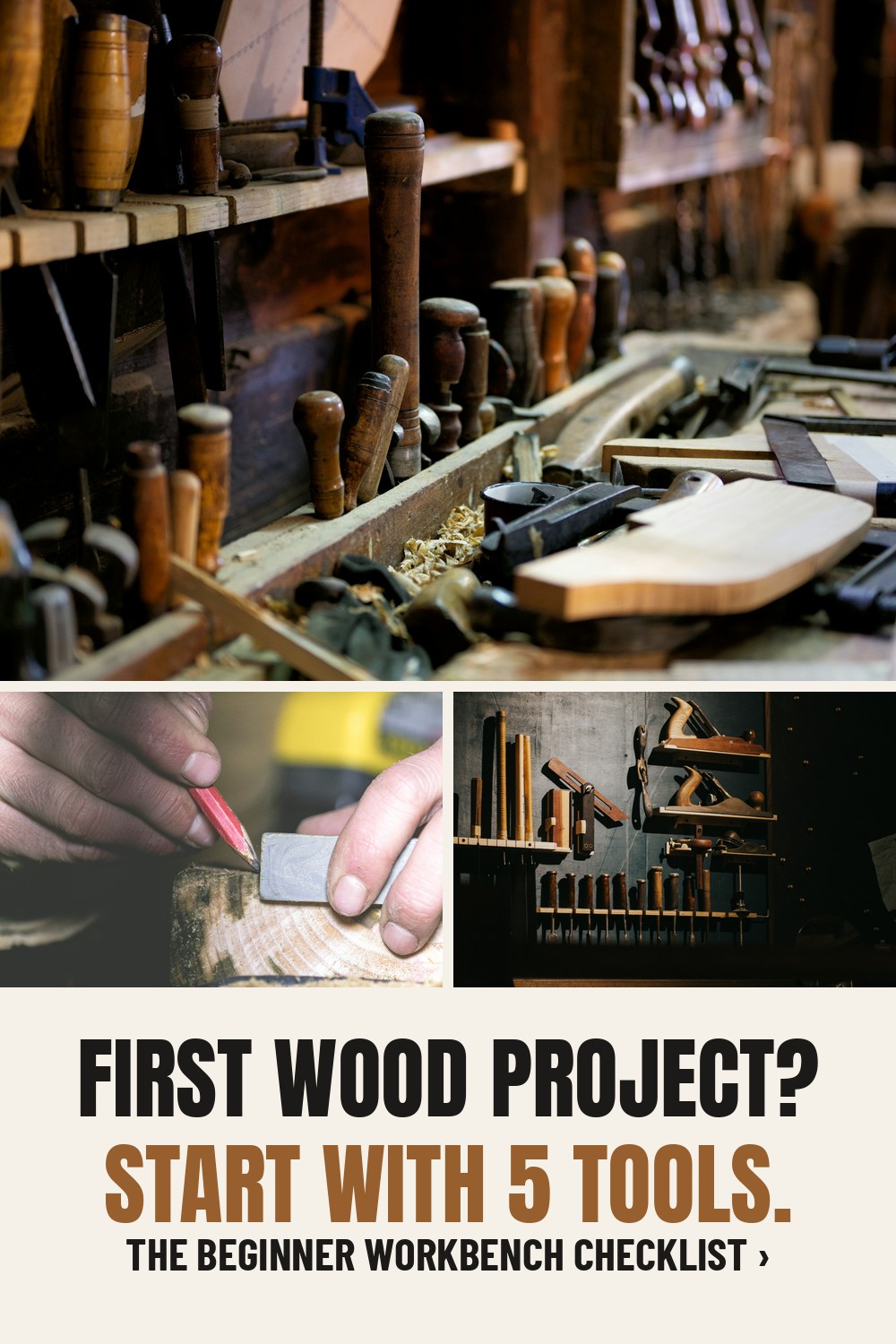
The starter tools
A tape, a square, a pencil, a saw you can cut straight with, a drill, sandpaper, screws, and glue. Safety glasses. Ear protection when the saw is loud. Clamps when you can add them. That kit covers a shelf, a simple box, and many 2x4 bench plans. A straightedge guide keeps the circular-saw cut clean. The library includes a materials list on each plan, so the lumber you buy matches the cuts on the page.
The guide says a garage and a basic saw are enough for a long list of these projects. A full shop can wait until the shelf is up and the next plan is already picked. The Complete Woodworking Guides in the package run over 200 pages on hand tools and the first joints, with drawings and photos, for the hour before you cut.
A clear plan is what makes the first build go smoothly
The stall usually happens around step four. A measurement that fights the diagram. A jump from “cut the sides” to “put the face on,” with the middle left out. The guide says that is why each plan in this library is drafted, built, and checked in the workshop first: every joint tested, every measurement verified, then the steps written from the build. Cut list, schematics, assembly order. Step one leads to step two.
You open the members area, search “wall shelf” or “workbench,” and the plan is tagged and ready. The guide says new plans arrive each month, five to eight from the workshop classes, and a custom request is there if the hall is an odd length. A CAD viewer comes with the package so you can adjust a drawing to the wall you actually have. That is the smooth first Saturday: lumber that matches the list, cuts that match the diagram, a shelf that sits where you pictured it.

Watch the full video walkthrough
The projects that come after the first shelf
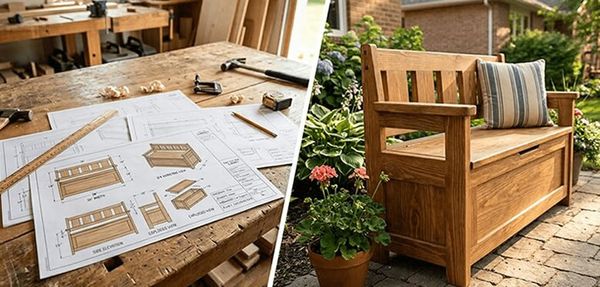
Once the shelf is up, the next one is already in the library. Storage and organization, outdoor and garden, furniture, kitchen pieces, kids’ builds, workshop jigs. The guide says the set runs past 2,600 furniture plans and past 1,800 workshop plans, with outdoor projects and small crafts in the same collection. A coffee table, a toy chest, a coop, a tool cabinet for a tight garage. You search, you download, you cut.
Lifetime access keeps the monthly plans coming, and 150 premium videos sit beside the drawings, joinery through later techniques, with new ones added. The next project is a choice you make on Sunday night, while the shelf is already doing its job in the hall.
What you get
Ted’s Woodworking is the library: over 16,000 projects with step-by-step details, drawings, cutting lists, and materials lists, in a searchable members area. The guide says you also get lifetime monthly plans, a custom plan request, the DWG and CAD plan viewer, 150 premium videos, a guide on starting a woodworking business, and the Complete Woodworking Guides. Physical copies are available too.
Three months from now the hall has the shelf, the bench has sawdust on it, and the next plan is already downloaded. Today, measure the bare wall and write the length on a scrap of paper.
Saturday still starts in that cool garage. The difference is a cut list in your hand and a finish line you can see.
See the Ted’s Woodworking video walkthrough
FAQ
What is a good first woodworking project for beginners?
A simple wall shelf for most people. A basic 2x4 workbench if you want a shop surface first. The library includes both, with a cut list and step-by-step instructions.
What tools do I start with?
Tape, square, pencil, a circular saw or miter saw, a drill, sandpaper, screws, and glue. The guide says a garage and a basic saw cover a long list of these plans.
What do you receive?
The library includes over 16,000 plans with drawings, cutting lists, and materials lists, plus monthly new plans, a custom request, a CAD viewer, 150 videos, and the woodworking guides.
Related on this site
Simple wall shelf for beginners
Circular saw and drill starter kit
2x4 workbench as a first shop surface
Additional guides